
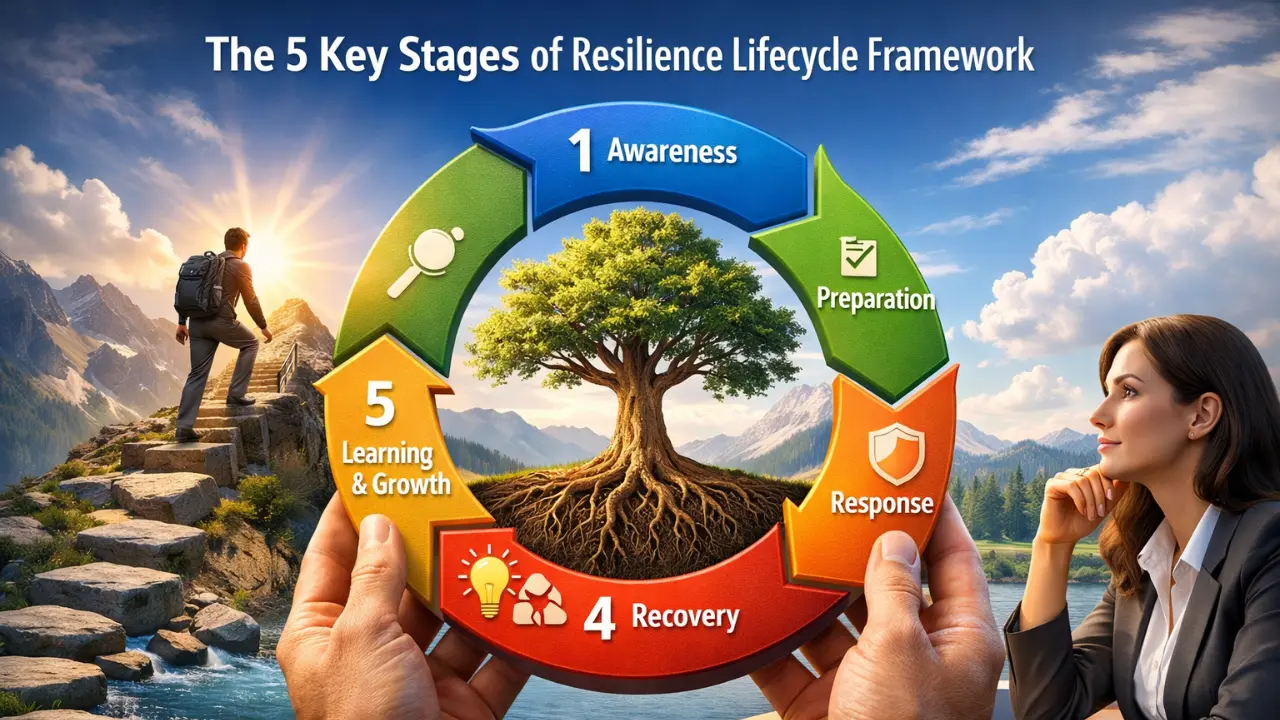
In today’s fast-paced and often unpredictable world, resilience is no longer just a personal trait it’s a necessary skill. But how can individuals and organizations systematically build resilience rather than rely on instinct or luck? The answer lies in understanding what are the 5 key stages of resilience lifecycle framework. This framework offers a structured approach to developing, maintaining, and strengthening resilience over time.
Whether you are an individual looking to improve personal resilience or a professional seeking to enhance organizational strength, understanding these five stages is crucial for long-term success.
Understanding the Resilience Lifecycle Framework
Before diving into the five stages, it’s important to define what we mean by a resilience lifecycle. A resilience lifecycle is a structured approach that guides individuals or organizations through the process of recognizing challenges, preparing for them, responding effectively, recovering, and finally, learning and evolving.
The resilience framework ensures that resilience isn’t just reactive it becomes proactive. By following this framework, you can handle stress, setbacks, and unexpected events with clarity and confidence.
In essence, the resilience lifecycle transforms challenges into opportunities for growth, helping you build both mental toughness and practical strategies for problem-solving.
The 5 Key Stages of Resilience Lifecycle Framework
Here’s a detailed look at what are the 5 key stages of resilience lifecycle framework, with practical tips for each stage.
1. Awareness
The first stage of the resilience lifecycle is awareness. This involves recognizing potential stressors, challenges, or risks before they escalate. Awareness isn’t just about knowing a problem exists it’s about understanding its scope and impact.
Practical tips for building awareness:
- Keep a personal or team journal to track recurring challenges.
- Conduct risk assessments in your work or personal environment.
- Stay informed about changes in your industry, community, or personal life that may affect stability.
For example, an organization noticing declining employee morale early can intervene before it affects productivity. Similarly, individuals recognizing signs of burnout can take preemptive steps to reduce stress.
2. Preparation
Once you are aware of potential challenges, the next stage is preparation. Preparation is about putting strategies and resources in place to handle stressors effectively.
Strategies for preparation:
- Develop contingency plans for potential risks.
- Build support networks, including mentors, peers, or professional advisors.
- Strengthen skills relevant to your personal or professional challenges.
For instance, someone preparing for a career change might take relevant courses, update their resume, and seek mentorship. Preparation ensures that when a challenge arises, you can respond effectively rather than react impulsively.
3. Response
The response stage occurs when a challenge or stressor has manifested. This is the stage where your awareness and preparation are tested. A measured, calm response is essential to maintaining resilience.
Tips for an effective response:
- Stay calm and focus on actionable steps rather than emotions.
- Use problem-solving techniques such as breaking issues into smaller parts.
- Lean on your support network for guidance or feedback.
For example, during a workplace crisis, a manager using the resilience lifecycle framework would communicate clearly with their team, delegate tasks efficiently, and maintain composure, reducing overall stress and ensuring effective problem-solving.
4. Recovery
After the initial response, the recovery stage focuses on restoring balance, learning from the situation, and mitigating any residual impact. Recovery is not just about bouncing back it’s about doing so in a way that strengthens future resilience.
Recovery strategies include:
- Reflecting on what worked and what didn’t in your response.
- Implementing self-care routines to restore physical and emotional energy.
- Adjusting strategies for future challenges based on lessons learned.
For instance, an athlete recovering from an injury might not only focus on physical rehabilitation but also on mental resilience, ensuring they return stronger than before.
5. Learning and Evolution
The final stage in the resilience lifecycle is learning and evolution. This stage emphasizes growth and continuous improvement. By learning from past experiences, you develop stronger coping mechanisms and enhance your ability to handle future challenges.
Tips for growth and evolution:
- Conduct a post-mortem review of challenges faced.
- Document lessons learned and integrate them into personal or organizational practices.
- Encourage continuous skill development and self-improvement.
A business that experiences a market disruption can evolve by adopting more agile processes, while an individual can emerge with improved emotional intelligence and decision-making skills.
Benefits of Understanding the Resilience Lifecycle Framework
Understanding what are the 5 key stages of resilience lifecycle framework provides multiple benefits:
- Proactive problem-solving: Instead of reacting under pressure, you anticipate challenges.
- Reduced stress and burnout: Preparation and recovery stages ensure mental and emotional well-being.
- Enhanced personal growth: Continuous learning and evolution strengthen long-term resilience.
- Stronger teams and organizations: A structured framework allows organizations to withstand crises more effectively.
- Improved adaptability: Each stage builds the ability to adapt to changing circumstances with confidence.
By following this framework, both individuals and organizations can transform challenges into opportunities for growth and improvement.
Real-Life Applications of the Resilience Lifecycle Framework
Understanding what are the 5 key stages of resilience lifecycle framework is one thing, but applying it in real life is where the true benefits emerge. For example, professionals facing tight deadlines can use the framework to stay calm and prioritize tasks effectively. Similarly, parents managing family challenges can apply the stages to maintain balance and reduce stress.
By breaking down complex problems into manageable stages awareness, preparation, response, recovery, and learning anyone can navigate adversity more confidently. This practical approach ensures that resilience is not just a theoretical concept but a usable tool in everyday life.
Building Long-Term Habits Through the Framework
One of the biggest advantages of following the resilience lifecycle is that it encourages building long-term habits. When you consistently practice the five stages, resilience becomes second nature. For instance, regularly reflecting on past challenges (learning and evolution stage) helps you anticipate similar issues in the future.
Incorporating these habits into daily routines like journaling for awareness, goal-setting for preparation, or mindfulness exercises for recovery makes resilience a sustainable skill rather than a temporary fix. Over time, individuals notice improved decision-making, reduced anxiety, and greater overall confidence.
Resilience and Emotional Intelligence
The resilience lifecycle framework is closely linked with emotional intelligence. Each stage requires self-awareness, self-regulation, empathy, and social skills. For example, during the response stage, emotional regulation allows individuals to act rationally instead of reacting impulsively.
Understanding what are the 5 key stages of resilience lifecycle framework helps people strengthen emotional intelligence while simultaneously building resilience. Strong emotional intelligence supports better communication, conflict resolution, and teamwork key elements for both personal growth and organizational success.
The Role of Leadership in Promoting Resilience
In organizations, leadership plays a crucial role in applying the resilience lifecycle framework. Leaders who model resilience through their actions can inspire teams to follow suit. By promoting awareness, encouraging preparation, guiding responses, supporting recovery, and fostering a culture of continuous learning, leaders embed resilience into the organization’s DNA.
This approach reduces the impact of crises, improves morale, and ensures that employees are not only surviving challenges but learning and evolving through them. The framework becomes a shared language for navigating uncertainty effectively.
Common Misconceptions About Resilience
Many people confuse resilience with simply “toughing it out” or ignoring difficulties. However, the resilience lifecycle framework clarifies that resilience is strategic, structured, and proactive. Understanding what are the 5 key stages of resilience lifecycle framework highlights that skipping stages such as neglecting preparation or recovery can reduce effectiveness and increase stress.
Resilience is not about avoiding challenges; it’s about recognizing them early, responding intelligently, and learning from the experience to grow stronger. By following all five stages, individuals and organizations create a sustainable foundation for long-term success.
Integrating Technology into the Resilience Framework
In the modern world, technology can enhance each stage of the resilience lifecycle. For example, productivity apps and digital calendars support the preparation stage, while mental health apps can aid recovery and reflection. Organizations can use analytics tools to monitor risks and employee well-being, integrating data-driven strategies into their resilience framework.
By combining technology with human insight, the resilience lifecycle becomes more actionable, measurable, and adaptable ensuring that individuals and teams are always prepared to handle unexpected challenges.
Personalized Resilience Strategies
Finally, it’s important to remember that resilience is personal. While the framework provides a structured approach, each individual or organization should tailor strategies to their specific context. Some people may need to focus more on preparation, while others benefit most from recovery practices.
Understanding what are the 5 key stages of resilience lifecycle framework allows flexibility. You can adapt it to your lifestyle, professional environment, or organizational culture, ensuring the framework is not rigid but a living, evolving system that supports growth and well-being.
Frequently Asked Questions
How does the resilience lifecycle framework help individuals?
It provides a structured approach to manage stress, prepare for challenges, and grow from setbacks, ultimately enhancing mental toughness and problem-solving skills.
Can organizations use this framework effectively?
Yes, organizations can adopt the resilience lifecycle to improve team performance, mitigate risks, and maintain operational stability during crises.
What are common mistakes in building resilience?
Common mistakes include ignoring the awareness stage, failing to prepare, reacting impulsively, and neglecting recovery and learning stages.
How long does it take to develop resilience using this framework?
Resilience development is ongoing. While basic coping skills can be built quickly, mastery comes through consistent application of all five stages.
Are the five stages applicable to personal and professional life?
Absolutely. The framework is versatile and can be applied to personal development, workplace challenges, organizational crises, and even community resilience.
Conclusion
In summary, understanding what are the 5 key stages of resilience lifecycle framework is vital for anyone aiming to improve personal or organizational resilience. The stages awareness, preparation, response, recovery, and learning/evolution offer a comprehensive roadmap for handling challenges effectively.
By applying this framework, you don’t just survive difficulties you thrive through them. Whether it’s personal development, workplace challenges, or organizational growth, integrating these stages ensures you are better equipped to face uncertainty with confidence, strength, and clarity.
Remember, resilience is not a one-time achievement it’s a lifelong journey. Start applying these stages today, and watch your ability to handle challenges transform dramatically.
